Biofouling Management in the Salish Sea: Drag Physics, Invasive Species, and the “Grooming” Revolution
In the maritime industry, a clean hull is not a cosmetic luxury; it is a fundamental operational requirement. For commercial operators, charter fleets, and long-range cruisers in Vancouver, biofouling represents a massive, silent tax on efficiency.
The waters of the Salish Sea are biologically potent. A vessel sitting idle in False Creek or the Fraser River can transition from “clean” to “heavily fouled” in a matter of weeks during peak season. Neglecting this growth doesn’t just slow you down—it triggers a cascade of fuel penalties, mechanical strain, and regulatory risks regarding invasive species.
Spica Cleaning Services LTD advocates for a technical, data-driven approach to hull maintenance. We are moving the local industry away from reactive “scraping” toward proactive “grooming.” Here is the science behind why.
The Economics of Drag: Microfouling vs. Macrofouling
The impact of biofouling on fuel consumption is governed by fluid dynamics. Even a hull that looks clean from the dock may be carrying a layer of drag-inducing biology.
1. Microfouling (Slime)
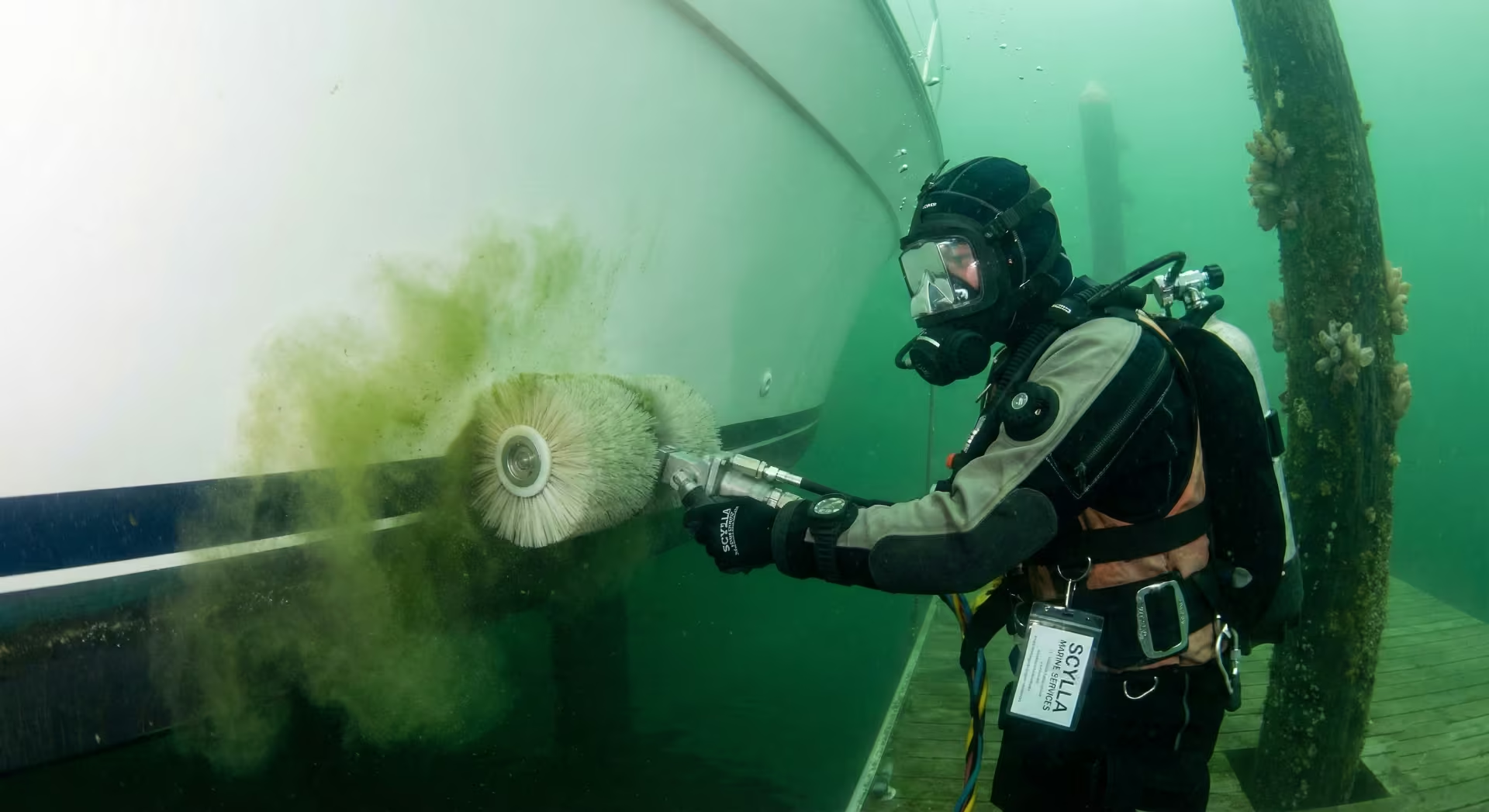
This is the initial colonization phase—a layer of bacteria, diatoms, and algae that feels slippery to the touch. While it may seem insignificant, studies show that a heavy slime layer can increase a vessel’s hydrodynamic drag by 10% to 20%. For a commercial tug or trawler, that is a direct 10-20% increase in fuel consumption to maintain service speed.
2. Macrofouling (Hard Growth)
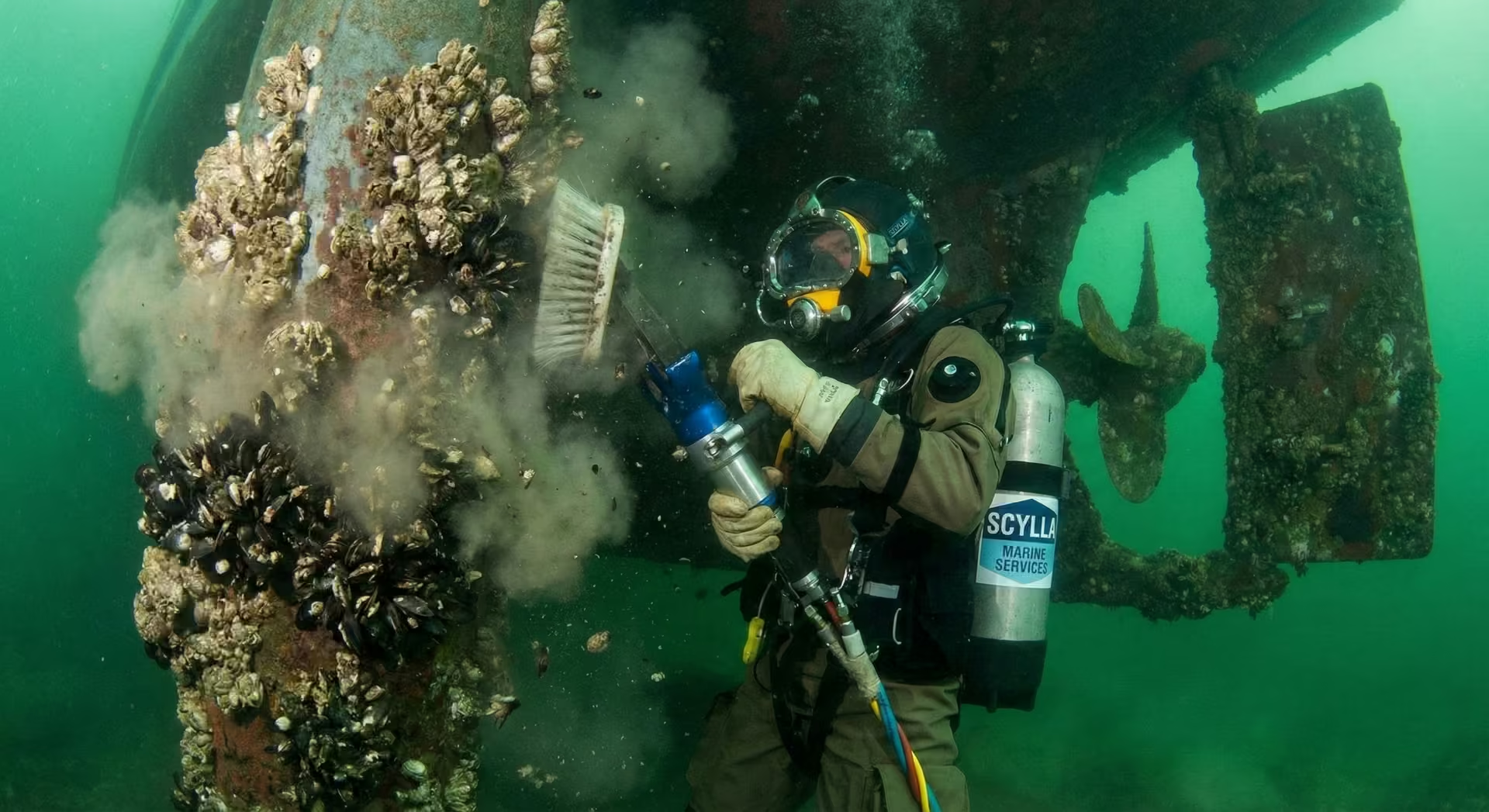
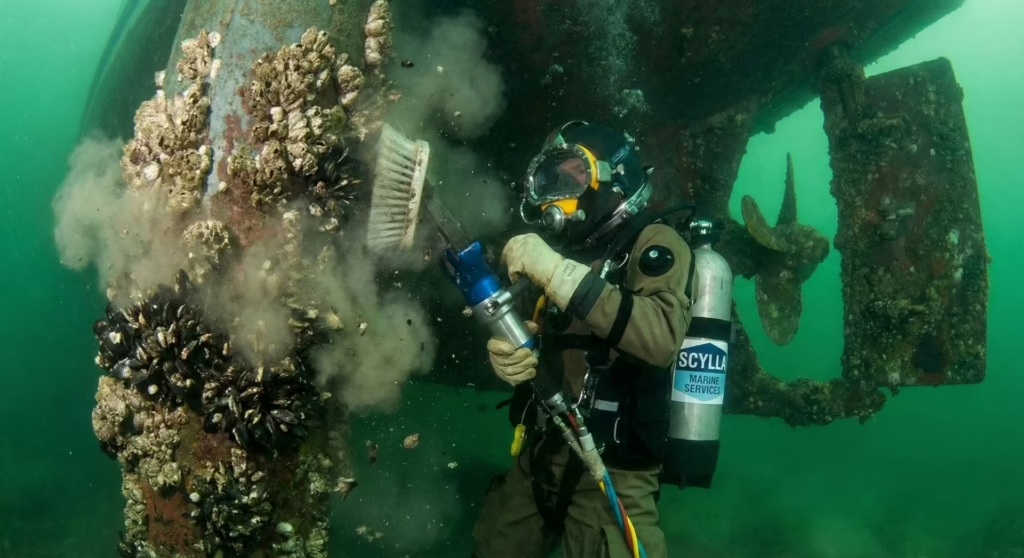
If slime is left unchecked, it provides the substrate for “hard foulers” like barnacles (Balanus glandula), mussels (Mytilus), and tubeworms. Once calcareous (hard shell) growth establishes, the hull’s roughness profile spikes. Hydrodynamic drag can skyrocket by 40% to 60%. This forces engines to work harder, raising exhaust gas temperatures and drastically shortening engine life.
The Paradigm Shift: “Grooming” vs. Cleaning
Traditionally, boat owners waited until they saw barnacles before calling a diver. This “reactive cleaning” is outdated and damaging.
- The Problem with Scraping: Removing hard barnacles requires aggressive scraping. This inevitably removes layers of your expensive antifouling paint and releases heavy metals (copper/zinc) and microplastics into the water column. It shortens the lifespan of your bottom paint.
- The Grooming Solution: Transport Canada and the International Maritime Organization (IMO) now recommend “Proactive Grooming.” This involves frequent, light cleaning using soft brushes before hard growth attaches. Grooming removes the slime layer without removing the paint, extending the life of your antifouling coating and maintaining peak fuel efficiency year-round.
Seasonality of Settlement in Vancouver
To groom effectively, you must understand the biological calendar of the BC coast. Fouling does not happen evenly throughout the year.
- Spring (April–May): The “spring bloom” of phytoplankton triggers the reproductive cycle of local barnacles. The water column fills with microscopic larvae (nauplii). Settlement begins.
- Summer (June–August): This is the High Risk Window. Warmer water temperatures in the Strait of Georgia accelerate metabolic rates. A barnacle can grow from a speck to a hard-shelled adult in weeks. During this period, cleaning intervals must be tightened to every 4 weeks to prevent hard attachment.
- Winter (November–March): Growth slows significantly. While slime continues to accumulate, hard shell settlement is minimal. Intervals can often be extended to 8–10 weeks.
The Invasive Species Threat and Regulatory Lockdown
Biofouling is a primary vector for Aquatic Invasive Species (AIS). In BC waters, we are on high alert for the European Green Crab (Carcinus maenas) and invasive tunicates (like the Club Tunicate), which destroy eelgrass beds and outcompete native Dungeness crabs.
The “Capture” Mandate
Because of this threat, the Port of Vancouver and Transport Canada have implemented strict guidelines. In-water cleaning of heavy macrofouling is increasingly restricted.
- The Rule: If your hull has heavy barnacle growth (macrofouling), you may be prohibited from in-water cleaning unless the diver uses “Capture Technology”—specialized equipment that vacuums up debris and filters the water before releasing it.
- The Trap: If you neglect your hull and it becomes heavily fouled, you may be refused service by reputable divers to avoid environmental fines, forcing an expensive emergency haul-out. Regular grooming prevents you from falling into this regulatory trap.
Propeller Polishing: The ROI Champion
While the hull is important, the propeller is critical. A propeller relies on smooth laminar flow to generate thrust. A propeller covered in even a thin layer of calcium (tube worms) suffers from cavitation and massive efficiency loss.
Polishing a propeller to Rubert Grade A (smooth metal) can yield fuel savings of 6% to 12% independently of the hull condition. For commercial fleets, this is the single highest Return on Investment (ROI) maintenance activity available.
Conclusion
In the Salish Sea, waiting for barnacles is a losing strategy. By adopting a proactive grooming schedule, you reduce fuel bills, extend the life of your bottom paint, and comply with environmental regulations protecting our coast. Spica Cleaning Services LTD provides the scheduled, technical maintenance required to keep your vessel drag-free and compliant.