Marine Water Tank Restoration: NSF-61 Compliance, Confined Space Safety, and Rust Control
For commercial vessels and long-range yachts operating in British Columbia, the potable water tank is a critical life-support system. Yet, it is often the most neglected space on board—until a water quality test fails or a crew member falls ill.
Restoring a steel or aluminum water tank is not a standard painting project. It sits at the intersection of public health and high-risk industrial safety. In Vancouver, strict adherence to NSF/ANSI Standard 61 for chemical safety and WorkSafeBC Confined Space regulations is mandatory.
At Spica Cleaning Services LTD, we refuse to cut corners on tank lining. This guide details the industrial protocols we use to ensure your vessel’s water remains safe and your refit remains compliant.
Potable Water Safety: Understanding NSF/ANSI 61
You cannot use generic marine epoxy in a drinking water tank. The coating chemistry determines the safety of the water supply.
What is NSF-61?
NSF/ANSI Standard 61 (Drinking Water System Components – Health Effects) is the North American benchmark for materials that contact potable water. It tests for the leaching of hazardous contaminants—including solvents, heavy metals (lead), and volatile organic compounds (VOCs)—into the water.
If a coating is not NSF-61 certified, it may release toxins as it degrades, or promote the growth of biofilm and bacteria like Legionella.
The Spica Standard: Solvent-Free Epoxies
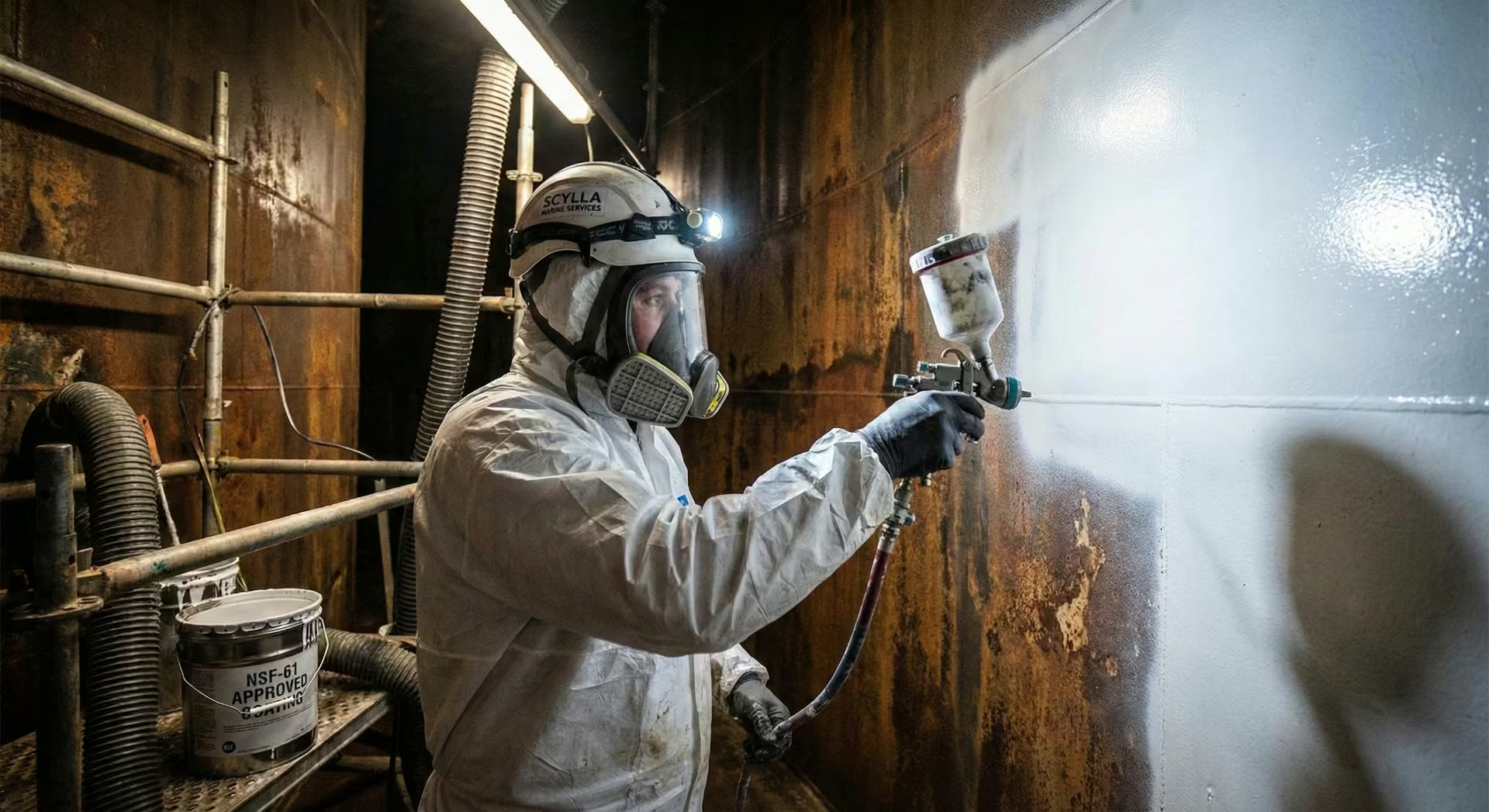
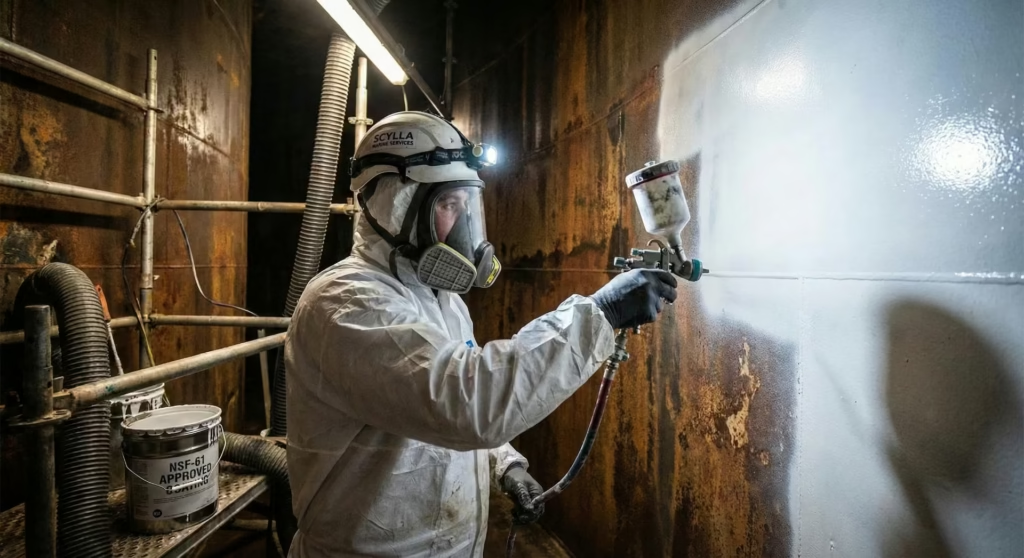
We utilize 100% solids, solvent-free epoxy linings such as Sherwin-Williams EnviroLastic or International Interline 975.
- Safety: Because they contain no solvents, there is zero risk of “solvent entrapment” leaching chemicals into your water later.
- Durability: These ceramic-like coatings form a glass-smooth, impermeable barrier that prevents water from touching the steel substrate, stopping corrosion instantly.
Confined Space Entry: The Legal & Safety Imperative
Working inside a vessel’s tank is defined as Confined Space Entry under WorkSafeBC Regulation Part 9 and federal marine safety regulations. This is high-stakes work involving risks of asphyxiation, toxic atmospheres, and entrapment.
Mandatory Safety Protocols in BC:
- Marine Chemist Certification: Before any worker enters a tank, a certified Marine Chemist or Qualified Person must test the atmosphere for oxygen levels, explosive gases (LEL), and toxins. A “Safe for Workers” certificate must be issued.
- Lockout & Isolation: All piping connected to the tank (fill lines, suction lines, vents) must be physically disconnected or “double-blocked and bled.” This prevents accidental flooding or the introduction of contaminants while workers are inside.
- Continuous Ventilation: We employ industrial extractors to maintain breathable air. In a confined tank, paint fumes can displace oxygen in seconds without forced ventilation.
- The Standby Person: A trained safety watch is stationed at the hatch at all times. They maintain communication with the entrants and are ready to initiate a rescue plan—they never enter the tank themselves.
Client Insight: Liability for confined space accidents falls heavily on the vessel owner. Hiring an uncertified contractor who skips these steps puts you at massive legal risk.
The Technical Execution: Surface Prep is Everything
A tank lining will fail within months if the surface preparation is flawed. In the humid, enclosed environment of a water tank, there is no margin for error.
Step 1: Abrasive Blasting
We blast steel tanks to SSPC-SP10 (Near-White Metal) or Sa 2.5. This removes all old coatings, rust scale, and biofilm, creating a rough “anchor profile” for the new epoxy to grip.
Step 2: Salt Testing
Invisible salt remains are a coating killer. We use Bresle Patch testing to measure soluble salts on the bare steel. If salts are trapped under the paint, they draw water through the coating via osmosis, causing blistering and detachment. We wash until salt levels are below 5 µg/cm².
Step 3: The “Stripe Coat”
Paint naturally pulls away from sharp edges (welds, stiffeners, baffles) as it cures, leaving a thin spot where rust starts. We apply a stripe coat by brush to every weld and edge before the full spray application. This ensures adequate film thickness in the areas most prone to failure.
Disinfection and Return to Service
Once the coating has cured (which can take 7 days depending on temperature), the tank is not ready yet. It must be disinfected.
We follow AWWA Standard C652 for disinfection. This typically involves:
- Chlorination: Filling the tank with a high-concentration chlorine solution (e.g., 50 mg/L) and letting it stand for 24 hours to kill any bacteria introduced during the work.
- Flush and Test: The tank is flushed with fresh water until chlorine levels return to normal, and a sample is sent to a lab to confirm the water is bacteria-free.
Conclusion
Restoring a potable water tank is an investment in the health of your crew and the longevity of your vessel. By combining NSF-61 certified chemistries with rigorous WorkSafeBC safety protocols, Spica Cleaning Services LTD delivers a restoration that meets the highest industrial standards. Don’t gamble with your water supply—trust the experts who understand the science of the tank.